


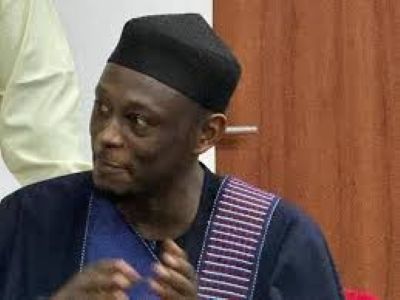
Abubakar Atiku Abubakar, popularly known as Abba and son of former Vice President and 2023 Peoples Democratic Party (PDP) presidential candidate, Atiku Abubakar, has explained the reasons behind his defection to the ruling All Progressives Congress (APC), insisting that his decision was driven by conviction, ideology and leadership appeal—not family ties.
Abba formally defected to the APC on Thursday at the National Assembly, Abuja, where he was received by the Deputy Senate President, Senator Barau Jibrin, alongside other senior APC leaders from the North-East. Party leaders described the move as a significant boost to the APC’s consolidation efforts ahead of the 2027 general elections.
Speaking at the event, Abba announced his resignation from the PDP, where he played an active role during the 2023 presidential campaign. He described his defection as a “personal and historic decision” taken after careful consideration of Nigeria’s political direction.
“My name is Abubakar Atiku Abubakar, but everyone calls me Abba. I am here today to formally announce my exit from my former party and my decision to join the APC,” he said.
Explaining what he termed the real reason for his decision, Abba said his move had nothing to do with family pressure or rebellion, but was influenced by his admiration for the leadership style of Senator Barau Jibrin and his belief in President Bola Ahmed Tinubu’s Renewed Hope Agenda.
According to him, Senator Barau’s political maturity, national outlook and role in governance convinced him that the APC offered a more credible platform to contribute meaningfully to Nigeria’s future. He pledged to work closely with the Deputy Senate President to mobilise support for President Tinubu’s second-term bid in 2027.
Abba also directed members and coordinators of his political platform, formerly known as the Haske Atiku Organisation, to immediately defect to the APC and align with the Tinubu administration’s reform agenda.
Welcoming him into the party, APC National Vice Chairman (North-East), Comrade Mustapha Salihu, described the defection as symbolic and far-reaching, noting that it reflected a growing shift towards issue-based politics rather than rigid party or family loyalties. He assured Abba of equal rights and opportunities within the APC, stressing that the party remained ideologically driven.
In his remarks, Senator Barau congratulated Abba for what he called a bold and principled decision, emphasising that his defection was based on belief in President Tinubu’s leadership and policies, not his father’s political background.
“You did not come here because of your father. You came because you believe in President Bola Ahmed Tinubu and his ideology,” Barau said.
He added that Abba, who had closely followed political developments from abroad, was impressed by the reforms and outreach of the Tinubu administration, which motivated his return to Nigeria and eventual defection to the APC.
Also speaking, a presidential aide, Alhaji Mahmoud Abdullahi, assured Abba of President Tinubu’s acceptance and support, describing the move as a sign of political maturity and a homecoming. On behalf of Abba’s supporters, Kano State Coordinator of the group, Hon. Mubarak Musa, said members would intensify efforts to deliver electoral victories for the APC in 2027.
The event also featured the formal renaming of Abba’s political association from Haske Atiku Organisation to Haske Bola Tinubu Organisation, signalling a complete political realignment ahead of the next general election.
Atiku reacts
Reacting to his son’s defection, former Vice President Atiku Abubakar described the move as a personal decision that should be respected in a democracy. He said political choices within families are not unusual and emphasised that he does not impose his political views on his children.
While acknowledging his son’s right to choose, Atiku reiterated his opposition to the APC-led government, maintaining that he remains committed to working with other opposition forces to offer Nigerians an alternative platform, which he believes can address the country’s economic and governance challenges.
The defection has continued to generate debate within political circles, underscoring the evolving alignments ahead of the 2027 general elections.
