


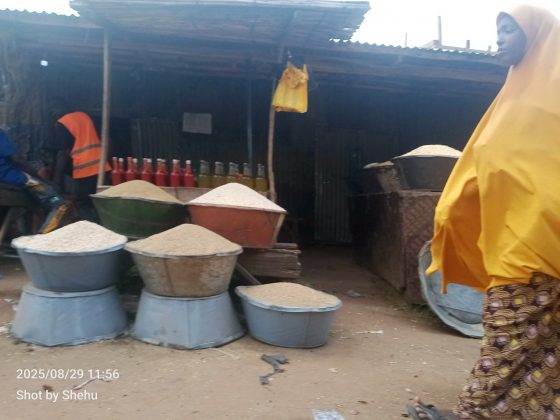
Prices of grains have continued to plummet across major markets in Gombe State, leaving farmers worried about the impact on their incomes and livelihoods.
A visit to the Gombe Central and Tudun Hatsi grain markets on Friday revealed that the prices of most commodities have fallen by more than 40 per cent compared to their levels at the beginning of the 2024 harvest season.
Traders say they are facing a glut and low patronage, as many buyers complain of lack of funds to purchase grains.
For instance, a 100kg bag of maize that sold for ₦60,000 at the beginning of the 2024 harvest now sells for ₦20,000 — a 66 per cent decline. Similarly, beans, which sold for between ₦105,000 and ₦145,000, now go for between ₦60,000 and ₦80,000, depending on the type and colour.
The price of a 100kg bag of processed rice dropped from between ₦130,000 and ₦145,000 to ₦95,000–₦100,000, while a mudu now sells for ₦900–₦1,250, down from ₦1,900–₦2,900.
A bag of paddy rice now sells for between ₦25,000 and ₦35,000, compared to between ₦50,000 and ₦70,000 earlier in the year. Groundnut prices have dropped from ₦170,000 to ₦95,000, while wheat declined from ₦120,000 to ₦70,000.
Millet also saw a steep decline — a 100kg bag now goes for ₦22,000, down from ₦56,000. Soybeans dropped from ₦110,000 to ₦60,000, while Bambara nuts declined from ₦180,000 to ₦110,000.
The Secretary of Tudun Hatsi Grain Market, Mallam Ali Musa, attributed the sharp drop in prices to what he described as the Federal Government’s deliberate effort to reduce food costs.
He, however, lamented that low patronage was affecting traders’ businesses. “People complain of lack of money. They say they don’t have money to buy,” Musa said.
He noted that many middlemen, who usually buy and hoard grains, have been unable to do so this year because they still have unsold stock from last season. “The prices crashed, and many of them were forced to sell at give-away prices,” he added.
Mr. Zakari Hinna, head of farmers in Hinna community, Yamaltu/Deba Local Government Area, said the falling prices, coupled with the high cost of inputs, were making farming less profitable.
“Many farmers who rely on fertilisers and other inputs no longer make good returns on their investment,” Hinna said.
The farmers appealed to both the federal and Gombe State governments to reduce the prices of agricultural inputs—especially fertilisers—to sustain the production of key crops such as rice, maize, and millet.
