

• Home
  • Agric
  • Sci & Tech
  • Health
  • Environment
  • Hausa News
  • More
    • Business/Banking & Finance
    • Politics/Elections
    • Entertainments & Sports
    • International
    • Investigation
    • Law & Human Rights
    • Africa
    • ACCOUNTABILITY/CORRUPTION
    • Hassan Gimba
    • Column
    • Prof. Jibrin Ibrahim
    • Prof. M.K. Othman
    • Defense/Security
    • Education
    • Energy/Electricity
    • Entertainment/Arts & Sports
    • Society and Lifestyle
    • Food & Agriculture
    • Health & Healthy Living
    • International News
    • Interviews
    • Investigation/Fact-Check
    • Judiciary/Legislature/Law & Human Rights
    • Oil & Gas/Mineral Resources
    • Press Freedom/Media/PR/Journalism
    • General News
    • Presidency
  • About Us
    • Contact Us
    • Board Of Advisory
    • Privacy Policy
    • Ethics Policy
    • Teamwork And Collaboration Policy
    • Fact-Checking Policy
    • Advertising
  • Media OutReach Newswire
    • Wire News
  • The Stories
Facebook Twitter Instagram
Trending
  • [VIEWPOINT] Why FG Should halt the persecution of Ozekhome, By Echika Ejido
  • Taraba: NAPTIP intercepts trafficker with 10 children
  • FG empowers 40 cooperatives with farm inputs in Yobe
  • PenCom launches online platform
  • Katsina to host 3,750 housing units, aquaculture project financed by COSMOS
  • Sokoto governor signs 2026 appropriation bill into law
  • Minister calls for strengthened collaboration to protect Gashaka-Gumti national park
  • Bus crash En route to Bayelsa deputy gov burial leaves 2 dead
Facebook Twitter Instagram YouTube
AsheNewsAsheNews
  • Home
  • Agric

    FG empowers 40 cooperatives with farm inputs in Yobe

    January 30, 2026

    Katsina to host 3,750 housing units, aquaculture project financed by COSMOS

    January 30, 2026

    ActionAid empowers 12,000 FCT farmers with agroecology skills

    January 30, 2026

    FAO: How Tanzania’s vaccination campaign is driving Africa closer to pest eradication

    January 29, 2026

    Kenya to host Gulfood360 Africa

    January 29, 2026
  • Sci & Tech

    Nigeria, KOICA partner to drive digital transformation in public service

    January 30, 2026

    NDPC leads Abuja roadshow to promote data protection awareness

    January 30, 2026

    NOTAP backs Nigerian developers to $1m sales

    January 29, 2026

    NIEEE, NDPC move to embed privacy in engineering projects

    January 29, 2026

    NCC clamps down on telcos with N12.4bn penalties over QoS breaches

    January 28, 2026
  • Health

    Bus crash En route to Bayelsa deputy gov burial leaves 2 dead

    January 30, 2026

    Awka south chairman urges grassroots sensitization ahead of measles-rubella vaccination

    January 30, 2026

    Plateau integrates NTD prevention into school health programme

    January 30, 2026

    Niger sustains NTD elimination drive as 11 suspected Buruli ulcer cases emerge

    January 30, 2026

    Fidson Healthcare records huge performance in 2025

    January 30, 2026
  • Environment

    Minister calls for strengthened collaboration to protect Gashaka-Gumti national park

    January 30, 2026

    Tudun Biri resettlement signals shift to structured post-conflict recovery — NEMA

    January 30, 2026

    Low awareness fuels spread of neglected tropical diseases — Stakeholders

    January 30, 2026

    Group urges NAFDAC to sustain enforcement of sachet alcohol ban

    January 30, 2026

    MTN, Lagos govt partner on Obalende bus park redevelopment

    January 30, 2026
  • Hausa News

    Anti-quackery task force seals 4 fake hospitals in Rivers

    August 29, 2025

    [BIDIYO] Yadda na lashe gasa ta duniya a fannin Ingilishi – Rukayya ‘yar shekara 17

    August 6, 2025

    A Saka Baki, A Sasanta Saɓani Tsakanin ‘Yanjarida Da Liman, Daga Muhammad Sajo

    May 21, 2025

    Dan majalisa ya raba kayan miliyoyi a Funtuwa da Dandume

    March 18, 2025

    [VIDIYO] Fassarar mafalki akan aikin Hajji

    January 6, 2025
  • More
    1. Business/Banking & Finance
    2. Politics/Elections
    3. Entertainments & Sports
    4. International
    5. Investigation
    6. Law & Human Rights
    7. Africa
    8. ACCOUNTABILITY/CORRUPTION
    9. Hassan Gimba
    10. Column
    11. Prof. Jibrin Ibrahim
    12. Prof. M.K. Othman
    13. Defense/Security
    14. Education
    15. Energy/Electricity
    16. Entertainment/Arts & Sports
    17. Society and Lifestyle
    18. Food & Agriculture
    19. Health & Healthy Living
    20. International News
    21. Interviews
    22. Investigation/Fact-Check
    23. Judiciary/Legislature/Law & Human Rights
    24. Oil & Gas/Mineral Resources
    25. Press Freedom/Media/PR/Journalism
    26. General News
    27. Presidency
    Featured
    Recent

    [VIEWPOINT] Why FG Should halt the persecution of Ozekhome, By Echika Ejido

    January 30, 2026

    Taraba: NAPTIP intercepts trafficker with 10 children

    January 30, 2026

    FG empowers 40 cooperatives with farm inputs in Yobe

    January 30, 2026
  • About Us
    1. Contact Us
    2. Board Of Advisory
    3. Privacy Policy
    4. Ethics Policy
    5. Teamwork And Collaboration Policy
    6. Fact-Checking Policy
    7. Advertising
    Featured
    Recent

    [VIEWPOINT] Why FG Should halt the persecution of Ozekhome, By Echika Ejido

    January 30, 2026

    Taraba: NAPTIP intercepts trafficker with 10 children

    January 30, 2026

    FG empowers 40 cooperatives with farm inputs in Yobe

    January 30, 2026
  • Media OutReach Newswire
    • Wire News
  • The Stories
AsheNewsAsheNews
Home»Food & Agriculture»How northern Nigerian farmers sweat in rising heatwaves
Food & Agriculture

How northern Nigerian farmers sweat in rising heatwaves

Abdoulaye KayBy Abdoulaye KayAugust 2, 2024Updated:August 2, 2024No Comments6 Mins Read
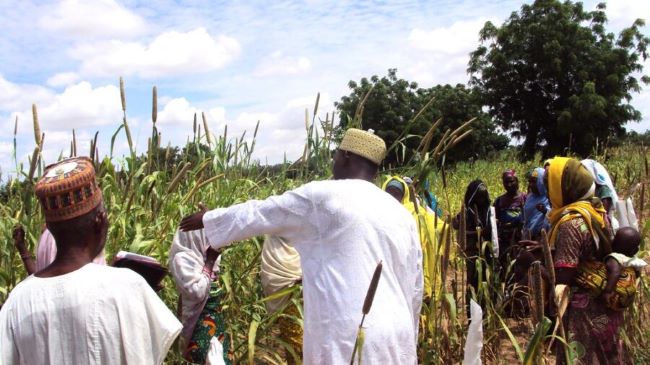
Heatwaves have become more frequent and intense in northern Nigeria in recent years. Credit: A Inua/ ICRISAT.
Share
Facebook Twitter LinkedIn Pinterest Email

Heatwaves: Ibrahim Bello, 54, walks to his farm in Karama community, Jigawa State, carrying a hoe on his shoulder and humming a local tune. His demeanour is upbeat, but his face reveals underlying concerns.

By Abdulwaheed Sofiullahi

At the start of last year’s July planting season, Bello borrowed N120,000 ($120) to begin farming wheat and sorghum. He readied the land and hired labourers to plant the crops, expecting rain to soften the soil. However, the month passed with only a few drops of precipitation. The crops never sprouted. Bello planted again in December but, yet again, any rain that fell was infrequent and no match for the extreme heat.

“I lost a lot last year and got into heavy debt,” he says. “The seasons used to be consistent, but now they’re uncertain.”

Bello’s story has become increasingly familiar in Jigawa State in northern Nigeria. Here, weather patterns have become more unpredictable and extreme, disrupting traditional farming seasons, and temperatures have risen.

According to the World Bank, Nigeria’s mean annual temperature has increased by 0.19C per decade over the past 30 years. Scientific projections show the country is set to become hotter, even with strong mitigation measures. By 2100, models predict an average temperature in Nigeria of over 32C under a business-as-usual scenario or 28.66C in a best-case scenario.

ALSO READ IITA, ICRISAT donate 1.34 tonnes of improved seeds to farmers in Yobe

A 2023 study defined 29C as the upper threshold of the “climate niche” – the range of temperatures within which humans have been able to flourish for millennia. Scientists found that very few communities have ever lived in areas hotter than 29C but calculated that 2 billion people could be pushed past this threshold as soon as 2030 under current policies.

Heatwaves and high temperatures significantly threaten food security. Research suggests that for every 1C rise in global mean temperature, agricultural yields could fall for wheat by 6%, rice by 3.2%, and maize by 3.2%. In 2020, maize crops experienced nine fewer growth days compared to the 30-year average.

Aduragbemi Victor Fasakin, an agricultural expert at Advice Farm, an integrated organic farm that produces organic food based in Abuja, explains that heat waves can also cause additional difficulties with knock-on effects for farming. High temperatures can make farm work dangerous, contributing to labour shortages for planting, weeding, and harvesting. Under extreme conditions, energy infrastructure can also suffer. “Even if water is available, limited energy access due to heat-related strain on the power grid can hinder irrigation pumping,” he says.

Fasakin also notes that while farmers can focus on growing crops better suited to withstanding the heat, the more extreme weather makes it harder for them to diversify their output, a strategy farmers use to reduce risk.

Helping farmers amid heatwaves

In late-2023, Nigeria’s Federal Ministry of Agricultural and Food Security launched a dry season wheat farming initiative to address some of the challenges facing farmers. Launched in Jigawa state and supported by a $134 million loan facility from the African Development Bank (AfDB), the programme aims to help 150,000-250,000 farmers with an effective 50% subsidy on agricultural inputs.

Farmers pay 12.5% of the costs of seeds, fertilisers, herbicides, and other items up front. A further 37.5% is owed post-harvest and guaranteed in the meantime by the Nigeria Incentive-Based Risk Sharing System for Agricultural Lending (NIRSAL).

Umar Namadi, Governor of Jigawa, has said that each farmer is supported by the equivalent of approximately N361,000 ($230) per hectare. The state government also committed to provide free high-quality extension services, engaging and training 1,440 new extension agents to ensure comprehensive support for the wheat farmers.

Several farmers in Jigawa state have welcomed the government initiative. Harizu Usama says that the support provided some financial stability and helped him produce and sell 20 bags of wheat, earning him N350,000 ($225). “Inputs that are hard to get are now cheaper and more available,” he says.

Another farmer, Mubaraq Issa, says the support has helped keep agriculture viable for him. “Before the programme, I almost gave up on farming,” he says. “Wheat farming is profitable due to the government’s support, which has increased my harvests. This has allowed me to expand my farming business and hire help.”

Both farmers, however, emphasised the need to extend support and ensure that it is not distributed based on political connections. “Some people who aren’t farmers received and sold the support items, while actual farmers are left out,” adds Issa.

Climate support across the board

While Nigeria’s dry season support has eased some challenges for farmers, climate experts stress that further action to confront the impacts of heatwaves is needed.

Mustapha Umar, an environmental services manager in Jigawa, calls for reforestation and the restoration of lost vegetation cover to reduce the heat island effect and biodiversity loss. He adds that early warning systems that use meteorological data to anticipate upcoming heatwaves and alert locals can be critical in helping communities to prepare for and mitigate the impacts of heatwaves.

ALSO READ INVESTIGATION: From safe havens to ghost towns: How workers battle to maintain healthcare amidst insecurity in Niger

“Collaboration between policymakers, local communities, and stakeholders is essential to implement and get the benefits of these measures effectively and build long-term resilience to heatwaves in the region,” he says.

Chizoba Nzeakor, a Climate and Clean Energy expert, emphasises the need for a multifaceted approach covering not just agricultural support but insurance schemes, water conservation techniques, and community education. Moreover, she stresses the importance of domestic and international support for all climate measures.

“Many solutions fail in Africa not due to a lack of innovation, but because of insufficient support,” says Nzeakor. “Unlike Europe, where numerous opportunities and subsidies exist, African innovators struggle without such backing.”

While some of this funding can be raised domestically, she points out that international funds will be critical to financing climate plans and that these will need to be transparent, efficient and accountable. She cites the 2023 flood crisis in Nigeria when, she says, substantial international aid was pledged but little was seen in terms of tangible support.

“The World Bank announced funds for flood relief, but nobody knows how that money was used. There must be proper monitoring to ensure that funds reach those who need them,” she says.

Africanarguments

AfDB Heatwaves ICRISAT NIRSAL World Bank
Share. Facebook Twitter Pinterest LinkedIn WhatsApp Reddit Tumblr Email
Abdoulaye Kay
  • Website

Related Posts

FG empowers 40 cooperatives with farm inputs in Yobe

January 30, 2026

Katsina to host 3,750 housing units, aquaculture project financed by COSMOS

January 30, 2026

ActionAid empowers 12,000 FCT farmers with agroecology skills

January 30, 2026

Leave A Reply Cancel Reply

[VIEWPOINT] Why FG Should halt the persecution of Ozekhome, By Echika Ejido

January 30, 2026

Taraba: NAPTIP intercepts trafficker with 10 children

January 30, 2026

FG empowers 40 cooperatives with farm inputs in Yobe

January 30, 2026

PenCom launches online platform

January 30, 2026
About Us
About Us

ASHENEWS (AsheNewsDaily.com), published by PenPlus Online Media Publishers, is an independent online newspaper. We report development news, especially on Agriculture, Science, Health and Environment as they affect the under-reported rural and urban poor.

We also conduct investigations, especially in the areas of ASHE, as well as other general interests, including corruption, human rights, illicit financial flows, and politics.

Contact Info:
  • 1st floor, Dogon Daji House, No. 5, Maiduguri Road, Sokoto
  • +234(0)7031140009
  • ashenewsdaily@gmail.com
Facebook Twitter Instagram Pinterest
© 2026 All Rights Reserved. ASHENEWS Daily Designed & Managed By DeedsTech

Type above and press Enter to search. Press Esc to cancel.